Grab vs Metered Taxi vs Tuk Tuk Bangkok: Honest Costs, Pros & Scam Warnings

Grab in Bangkok — How It Works
Grab is Southeast Asia's dominant ride-hailing app, and Bangkok is one of its busiest cities. Download the app, enter your pickup and drop-off points, and you receive a fixed price upfront — no negotiation, no meter watching, no unpleasant surprises at the end. Drivers are rated, GPS-tracked, and accountable through the platform.
Payment options include cash or GrabPay, a credit card linked in the app. Most visitors pay cash; cashless works well if you prefer to limit your stop at a Bangkok currency exchange booth before heading out.
The two main service categories are GrabCar (a private, air-conditioned sedan — typically a Toyota Camry or Honda City) and GrabBike (motorcycle taxi — fast in traffic but impractical with luggage). For airport transfers or longer cross-town journeys, GrabCar is the right call.
Surge pricing activates during peak hours (7–9am and 5–8pm) and during heavy rain. The fare is displayed before you confirm the booking, so you can always walk away if it looks steep. Guests at Royal Ivory Nana Hotel Bangkok on Sukhumvit Soi 4 can ask the front desk team to help confirm a pickup point and translate the destination into Thai — a small detail that prevents a surprising number of misdirected journeys.
Grab Pros
- Fixed price shown before you book
- Driver name, photo, and plate number visible before pickup
- Real-time GPS tracking for every ride
- Air-conditioned private vehicle
- Cash or card payment accepted
Grab Cons
- Surge pricing during rush hour and rainstorms
- Slightly pricier than a metered taxi on short trips in light traffic
- Requires a smartphone and mobile data connection
- Occasional driver cancellations at peak times
Metered Taxi — The Classic Option
Bangkok's metered taxis are plentiful, cheap, and air-conditioned. The flag fall is 35 THB, and fares climb at roughly 2 THB per additional kilometre after the opening distance. A 5km trip in light traffic typically runs 60–80 THB — competitive with Grab and unbeatable for short to medium daytime hops. The Sukhumvit corridor is saturated with them; another taxi appears within seconds of the last.
The golden rule: always insist on the meter. If a driver says "no meter" or quotes a flat rate through the window before you get in, close the door and flag another cab. There are thousands of metered taxis in Bangkok and a compliant one will come within a minute. Flat-rate offers in tourist areas like Nana or Asok are almost always two to three times the metered fare.
One practical tip: show your destination in Thai on Google Maps or ask hotel staff to write it on a card. Many drivers have limited English, and a quick visual confirmation prevents the most common navigation mix-ups.
Metered Taxi Pros
- Cheapest option for most daytime trips
- Everywhere — no app or mobile data required
- Air-conditioned and comfortable
- Flag fall just 35 THB
Metered Taxi Cons
- Some drivers decline the meter or refuse certain destinations
- Language barrier is common
- Fare unknown upfront — can accumulate in slow traffic
- Driver quality and vehicle condition vary widely
Tuk Tuk — Fun But Use Cautiously
The tuk tuk is Bangkok's most photographed vehicle. It is also the one most likely to take you somewhere you did not ask to go.
Let's be direct: tuk tuks have no meter and no fare regulation whatsoever. Every ride is negotiated, and the opening price quoted to tourists is almost always two to four times what a metered taxi would charge for the same distance. That is the optimistic outcome.
The Gem Scam: Read This Before You Ride
Bangkok's gem scam — one of the most persistent tourist cons in Asia — almost always begins with a tuk tuk driver. He approaches outside a temple or popular attraction and tells you, helpfully, that the site is closed for a special Buddhist holiday. He knows of a government export sale on gems and jewellery happening just for today, and he'll take you there for almost nothing, sometimes free. The store presents stones that appear dramatically discounted. They are not. The gems are synthetic, low-grade, or outright fake. The export discount is invented. The driver collects a commission for every tourist delivered.
This scam has operated continuously in Bangkok since the 1980s. It still works because it preys on politeness and bargain instincts. Any tuk tuk driver who volunteers that a nearby attraction is closed, or who offers a suspiciously cheap tour, is almost certainly running it. Do not engage — return to your hotel and rebook transport via Grab or ask front desk staff for help. Our full Bangkok safety guide covers this scam and every other common tourist trap in detail.
When Tuk Tuks Are Fine
A short tuk tuk ride is a genuinely fun experience and worth doing once — entirely on your own terms. Agree on a specific fare before you board, know exactly where you are going, keep the journey brief, and treat any premium over the taxi equivalent as the price of admission for the experience. Never use a tuk tuk for practical transport: no airport runs, no long-distance Sukhumvit hops, no journeys where you have a schedule to keep.
Cost Comparison Table
| Journey | Grab (GrabCar) | Metered Taxi | Tuk Tuk |
|---|---|---|---|
| Short hop (1–2 km) | 80–110 THB | 45–65 THB | 100–200 THB (negotiated) |
| Medium trip (5 km) | 110–160 THB | 70–95 THB | 200–350 THB (negotiated) |
| Longer trip (10 km) | 170–240 THB | 120–165 THB | Not recommended |
| Suvarnabhumi Airport (~30 km) | 300–450 THB + tolls | 250–350 THB + 50 THB surcharge + tolls | Not recommended |
| Price predictability | Fixed before booking | Variable (metered) | Negotiated — highly variable |
| Air conditioning | Yes | Yes | No (open-air) |
| Best for | Airport, nights, long trips | Daily use, value trips | Tourist experience only |
All prices in Thai Baht (THB), approximate. Expressway tolls (30–75 THB) are additional for both Grab and taxi on airport runs. Grab fares increase with surge pricing during peak hours and rain.
When to Use Each
Use Grab When:
- Travelling to or from Suvarnabhumi or Don Mueang airport
- It is late at night and you want full driver accountability
- You do not speak Thai and want zero negotiation
- You are travelling with luggage or as a group
- It is raining heavily and street taxis are scarce
Use a Metered Taxi When:
- You want the cheapest possible fare on a daytime trip
- You do not have a smartphone or mobile data available
- You are comfortable firmly requesting the meter in English
- You are making a short to medium hop with no strict time pressure
Use a Tuk Tuk When:
- You want the experience — and only the experience
- It is a very short, clearly defined journey you chose yourself
- You have agreed the fare before boarding, not after arriving
- You have time to spare and no fixed destination pressure
Skip All Three — Take the BTS:
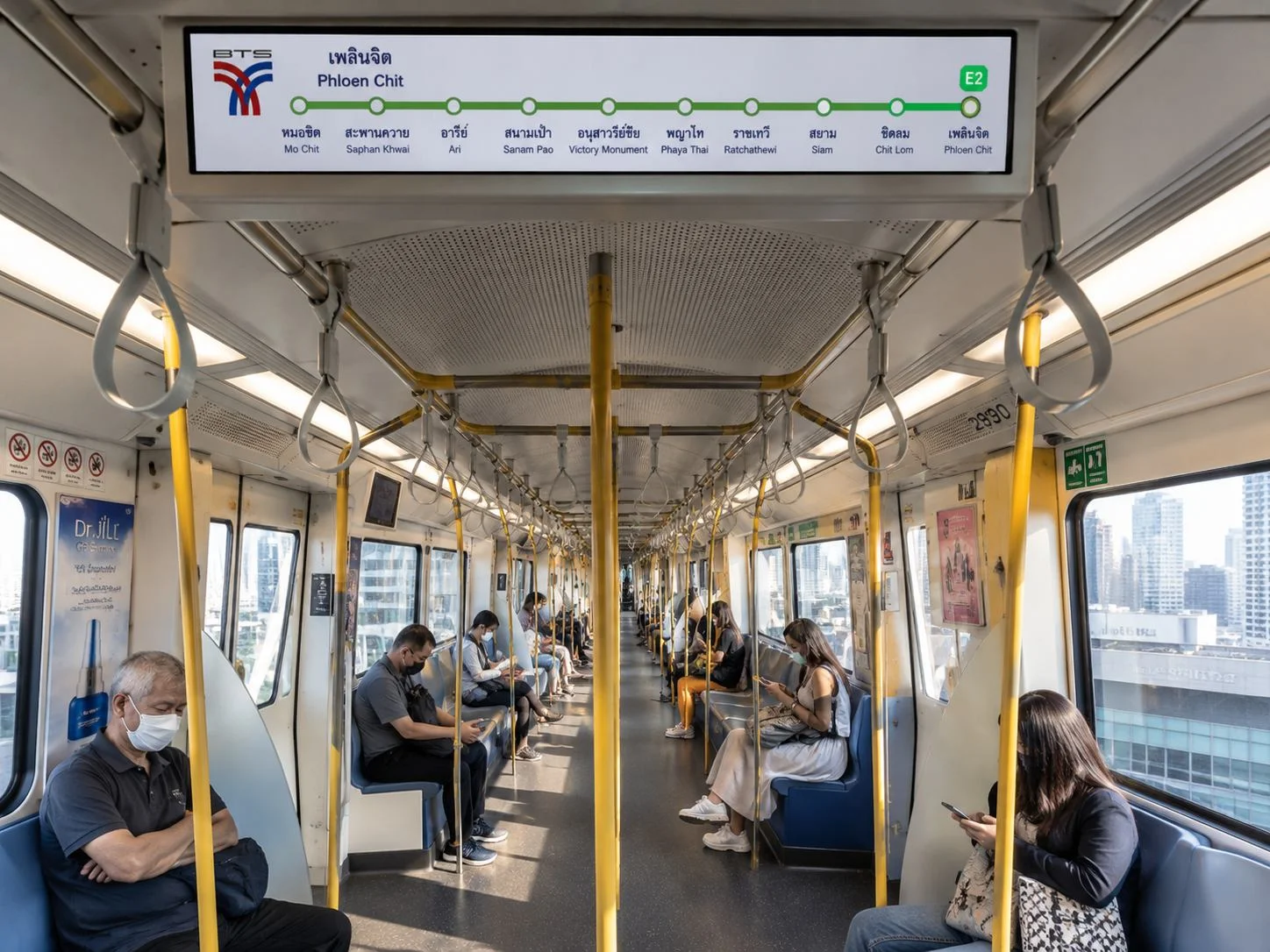
For most Sukhumvit journeys, the BTS Skytrain is faster, cheaper, and entirely immune to Bangkok's notorious traffic. Royal Ivory Nana Hotel sits a two-minute walk from BTS Nana station, making it one of the most transport-connected bases on the entire Sukhumvit strip.
Avoiding Overcharging
A few consistent habits will protect you from Bangkok's most common transport traps:
- Board the taxi, then state your destination. Say meter please as you close the door. If the driver refuses, get out before the vehicle moves — another taxi is thirty seconds away.
- Agree every tuk tuk fare before you board. Name your specific destination, ask the price, and counter it. Never ask how much after you arrive at the destination.
- Screenshot your Grab fare. If there is any payment dispute at journey's end, you have the confirmed quoted amount on record in your camera roll.
- Know your rough distances. BTS Nana to Asok is around 1.5 km. Nana to Silom is roughly 5 km. Nana to Suvarnabhumi Airport is around 30 km. These benchmarks make inflated quotes obvious on sight.
- Ignore closed attraction stories. Any driver who tells you your destination is closed for a holiday and offers an alternative route is almost certainly running a scam. Walk away and rebook through Grab or hotel staff.
- Use the hotel front desk. The team at Royal Ivory Nana Hotel can estimate a fair fare for your destination, help flag a compliant metered taxi, or assist with your Grab pickup setup — always at no charge.
Royal Ivory Nana Hotel Bangkok sits two minutes from BTS Nana on Sukhumvit Soi 4 — one of the most transport-connected addresses in the city for Grab pickups, metered taxis, and Skytrain access. Our front desk team is on hand around the clock for transport help, local directions, and honest travel advice. Book direct for the best available rate.
Frequently Asked Questions
Is Grab safe to use in Bangkok?
Yes. Grab drivers are registered, licensed, and tracked in real time via GPS. You see the driver's name, photo, vehicle make, and plate number before they arrive. It is the most accountable door-to-door transport option in Bangkok and is particularly reliable for solo travellers and late-night journeys.
Can I pay cash in a Grab taxi in Bangkok?
Yes. Cash is the default payment method for the majority of Grab rides in Bangkok. You can also link a credit or debit card through GrabPay in the app if you prefer a fully cashless trip.
What should I do if a Bangkok taxi driver refuses the meter?
Get out of the cab without argument. Bangkok taxis are legally required to use the meter and you are under no obligation to accept a flat rate. Another metered taxi will arrive within a minute on Sukhumvit. If you have repeated trouble, ask hotel staff to flag one for you or switch to Grab.
How much does a tuk tuk ride cost in Bangkok?
There is no set fare — every tuk tuk ride is negotiated individually. Tourist prices typically start at 100–150 THB for very short hops and are rarely cheaper than a metered taxi for the same distance. Treat any premium over the taxi equivalent as the cost of the experience, not a bargain fare.
Is Grab or a metered taxi better for Bangkok airport transfers?
Grab is generally preferable for airport runs. The fixed fare eliminates uncertainty during variable Bangkok traffic, and the app discloses expressway toll costs before you book. Metered taxis from Suvarnabhumi's official taxi rank on the ground floor are also reliable — confirm the meter is running and expect a 50 THB airport surcharge plus expressway tolls on top. See our full Bangkok airport transfer guide for all available options including the Airport Rail Link.
How do I avoid the tuk tuk gem scam in Bangkok?
Never board a tuk tuk whose driver volunteers that a nearby attraction is closed today. Never let any driver choose your destination or suggest an unplanned detour. Ignore all mentions of government sales, export discounts, or jewellery stores. When you want a tuk tuk ride, you choose the destination, agree the fare before boarding, and stay on the route you asked for. Full details on this and other Bangkok scams are in our Bangkok safety guide.