Erawan Waterfall Day Trip from Bangkok: Tiers, Cost, and Full Planning Guide (2026)
Add Royal Ivory as a preferred source on Google
Where Is Erawan Waterfall and How Do You Get There?
Erawan Waterfall sits inside Erawan National Park in Kanchanaburi province, roughly 3 to 3.5 hours by road from central Bangkok, depending on traffic leaving the city. It's a separate destination from the Death Railway and River Kwai sites covered in our Kanchanaburi day trip guide — Erawan is further north and dedicated almost entirely to hiking and swimming, not history.
Three practical options exist. A private driver or hired car gives you control over timing, which matters because the park gets crowded by mid-morning on weekends. A joined tour handles logistics but usually caps your time at the falls to around 3-4 hours. Public transport (minivan to Kanchanaburi town, then a songthaew to the park) is possible but adds significant time and isn't recommended if you only have one day.
Because the drive is long, an early start matters more here than for most Bangkok day trips. Guests based centrally, such as at Royal Ivory Nana Hotel near Sukhumvit, often arrange a driver or tour pickup before sunrise so they're at the park gates close to opening and back in Bangkok by evening.
How Much Does Entry Cost and What Are the Hours?
Erawan National Park charges a foreign visitor entry fee, which according to the Thai Department of National Parks is typically in the range of 300-400 THB for adults, with a lower rate for children and for Thai nationals. Fees are collected in cash at the gate, so bring small Thai baht notes.
The park generally opens around 8:00 AM and closes to new entrants in the mid-afternoon, with everyone required to be off the trail by roughly 4:30-5:00 PM. Arriving right at opening is the single best way to see the lower tiers before tour buses fill the pools — a genuine on-the-ground quirk here is that the queue at the ticket booth on a Saturday morning can back up 15-20 minutes before the gate even opens, so being among the first cars in the parking area saves real time later.
Which of the Seven Tiers Are Worth Hiking To?
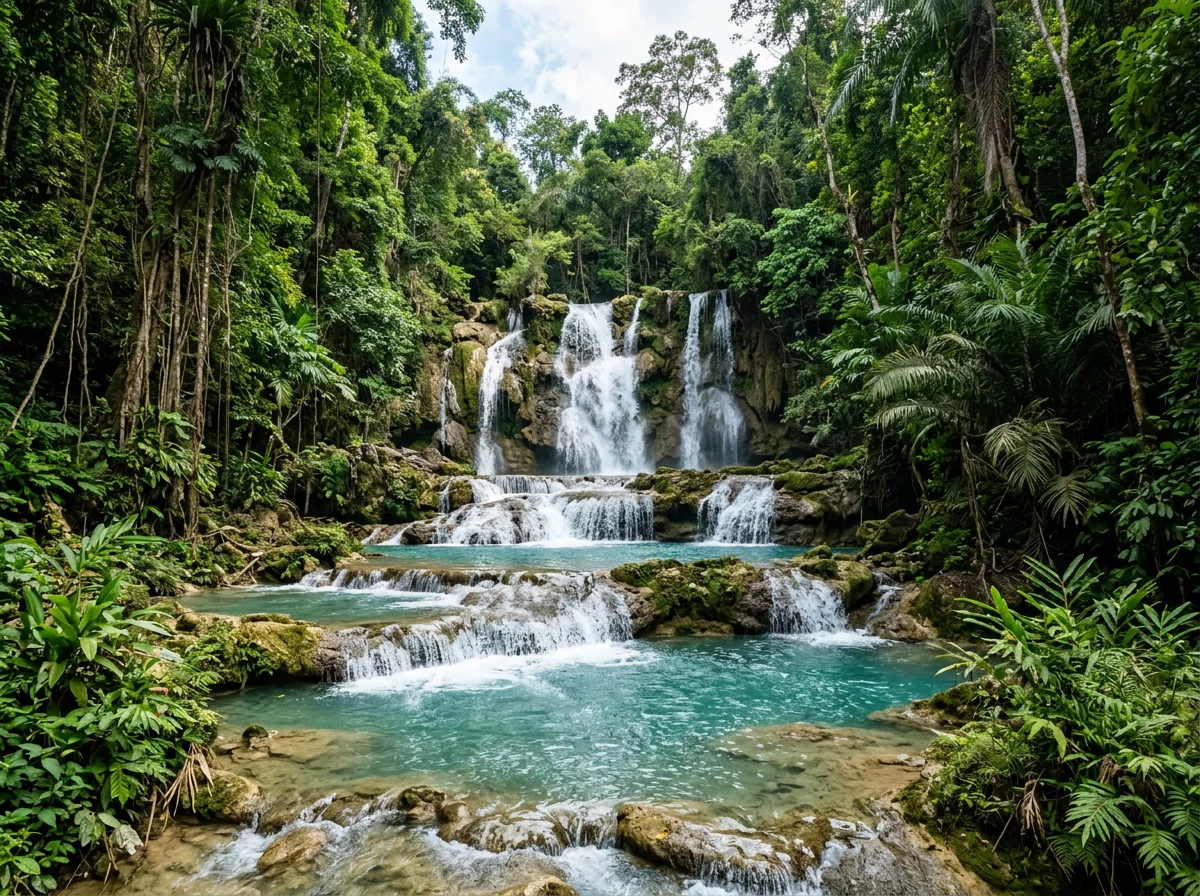
Erawan Waterfall has seven distinct tiers, connected by a marked trail that climbs roughly 1,500-2,000 meters in total, gaining elevation and difficulty as you go.
- Tiers 1-2: Flat, easy, wheelchair- and family-friendly, with the widest and busiest swimming pools.
- Tiers 3-4: Moderate walking on packed dirt and some tree roots; pools are calmer and slightly less crowded.
- Tier 5: A popular turning-back point for many visitors — scenic, still reasonably accessible, roughly 1.5-2 hours round trip from the entrance for an average walker.
- Tiers 6-7: Steep, slippery, rope-assisted sections in places; these require real fitness and grip, and are usually the quietest tiers because a large share of day-trippers stop at five.
If you only have half a day at the park, budget your time for tiers one through five and treat six and seven as a bonus if the trail isn't too crowded.
Staying in Bangkok?
Royal Ivory Nana Hotel is 2 minutes from BTS Nana — no joiner charge, outdoor pool, and 4.2/5 on Google. Family-owned since 2010.
Check Rates and BookWhat Should You Pack for the Hike and Swim?
The single most useful item is a pair of secure water shoes or old sneakers — the rocks around the pools are slick with algae, and flip-flops slide off constantly on the climb between tiers.
- Swimwear worn under quick-dry clothing (there are basic changing areas near the lower tiers).
- A dry bag or ziplock for your phone and cash.
- Reef-safe sunscreen and a hat — much of the lower trail has limited shade.
- A refillable water bottle; there are small vendors near the entrance but fewer options higher up.
- Cash in small denominations for entry, parking, and food stalls.
Note that fish nibbling at your feet in the pools is normal and harmless — it startles most first-time visitors, but it's just small local fish cleaning dead skin, not a hazard.
Independent Trip vs Organized Tour: Which Is Better?
Going independently with a hired driver gives you the most flexibility — you set your own pace on the trail and can leave once you've had enough, rather than being tied to a bus departure time. It costs more per person for a private car unless you're splitting it among a group.
An organized tour is simpler logistically and often cheaper solo, bundling transport, sometimes lunch, and occasionally a stop at a market or elephant sanctuary. The trade-off is a fixed, often tight window at the falls — frequently 3-4 hours, which is enough to reach tier five comfortably but leaves little room for lingering.
| Factor | Independent / Private Driver | Organized Tour |
|---|---|---|
| Flexibility | High — set your own schedule | Low — fixed pickup and return times |
| Cost per person (small group) | Higher if traveling solo | Generally lower |
| Time at the falls | As long as you like | Usually 3-4 hours |
| Best for | Groups, families, hikers wanting tiers 6-7 | Solo travelers, first-timers wanting simplicity |
Can You Combine Erawan with Other Kanchanaburi Sights?
Combining Erawan with the Death Railway Bridge and River Kwai sites in a single day is possible but rushed, since Erawan alone easily fills 5-6 hours once you include the drive and hiking. If historical sites are a priority, our Kanchanaburi day trip guide covers that route in depth and is better suited as a separate trip.
Travelers with more time sometimes stay overnight in Kanchanaburi town to split the waterfall and the historical sites across two calmer days, rather than cramming both into one long day from Bangkok. If your schedule only allows one Kanchanaburi-area excursion, most first-time visitors find the Death Railway and Bridge over the River Kwai easier to fit into a single day than Erawan, simply because Erawan's hiking component takes longer.
For travelers deciding between Kanchanaburi day trips generally and other classic routes, our Ayutthaya day trip guide is a shorter, temple-focused alternative closer to the city if a full waterfall hike isn't the priority.
Key Takeaways
- Erawan Waterfall is about 3-3.5 hours from Bangkok by road, separate from the Death Railway/River Kwai sites.
- Entry fees run roughly 300-400 THB for foreign adults, paid in cash at the gate.
- Most visitors hike to at least tier five; tiers six and seven require sturdier footwear and fitness.
- Water shoes are the single most useful packing item for the slick rocks between pools.
- Arriving right at opening avoids the worst queues and crowded lower pools.
Frequently Asked Questions
How long does it take to hike all seven tiers of Erawan Waterfall?
Reaching tier seven and back typically takes most hikers 3-4 hours round trip at a moderate pace, including stops to swim, though fitness level and trail crowding both affect timing.
Is Erawan Waterfall worth it as a day trip from Bangkok?
Yes, for travelers who enjoy hiking and swimming in a natural setting — the multi-tiered turquoise pools are considered one of the more scenic waterfall systems within day-trip range of Bangkok, though the drive is long for a single day.
Can you swim at every tier of Erawan Waterfall?
Most tiers have swimmable pools, though depth and current vary, and rangers may close certain pools after heavy rain when water levels rise.
Do you need a tour guide to visit Erawan Waterfall?
No, the trail is well-marked and signposted in English and Thai, so a guide isn't required, though a driver or tour handles the long transfer from Bangkok for travelers who don't want to arrange transport themselves.
What is the best time of year to visit Erawan Waterfall?
The cooler dry season from roughly November to February is generally considered most comfortable for hiking, while the rainy season can make trails slippery and occasionally closes higher tiers, according to Thailand's National Parks guidance.