Ayutthaya Day Trip from Bangkok: Temples, Trains & the Tree Buddha Head
Add Royal Ivory as a preferred source on Google
Getting to Ayutthaya from Bangkok
Ayutthaya sits 80km north of Bangkok — the ancient capital that governed Southeast Asia for over 400 years before Burmese forces sacked and burned it in 1767. Today it is a UNESCO World Heritage Site and one of Thailand's most rewarding day trips, packed with crumbling chedis, headless Buddhas, and one image that stops every traveller cold: a serene stone face staring out from the embrace of a banyan tree's roots.
Getting there is genuinely easy. Three options dominate: train from Hua Lamphong, minivan from Mo Chit, or an organised tour. The train wins on price, atmosphere, and flexibility — and from Sukhumvit, it is simpler than most visitors expect.
Train from Bangkok — The Best Way
Hua Lamphong Railway Station is Bangkok's grand old terminus, a vaulted hall that has been dispatching travellers north since 1916. Trains to Ayutthaya depart roughly every hour from 04:20 until late evening. The journey takes between 1 hour 20 minutes and 1 hour 50 minutes depending on the service.
Fares are astonishing value: THB 15 for the slow third-class train, up to THB 35 for a faster second-class service. No advance booking is required — buy at the window on the day of travel.
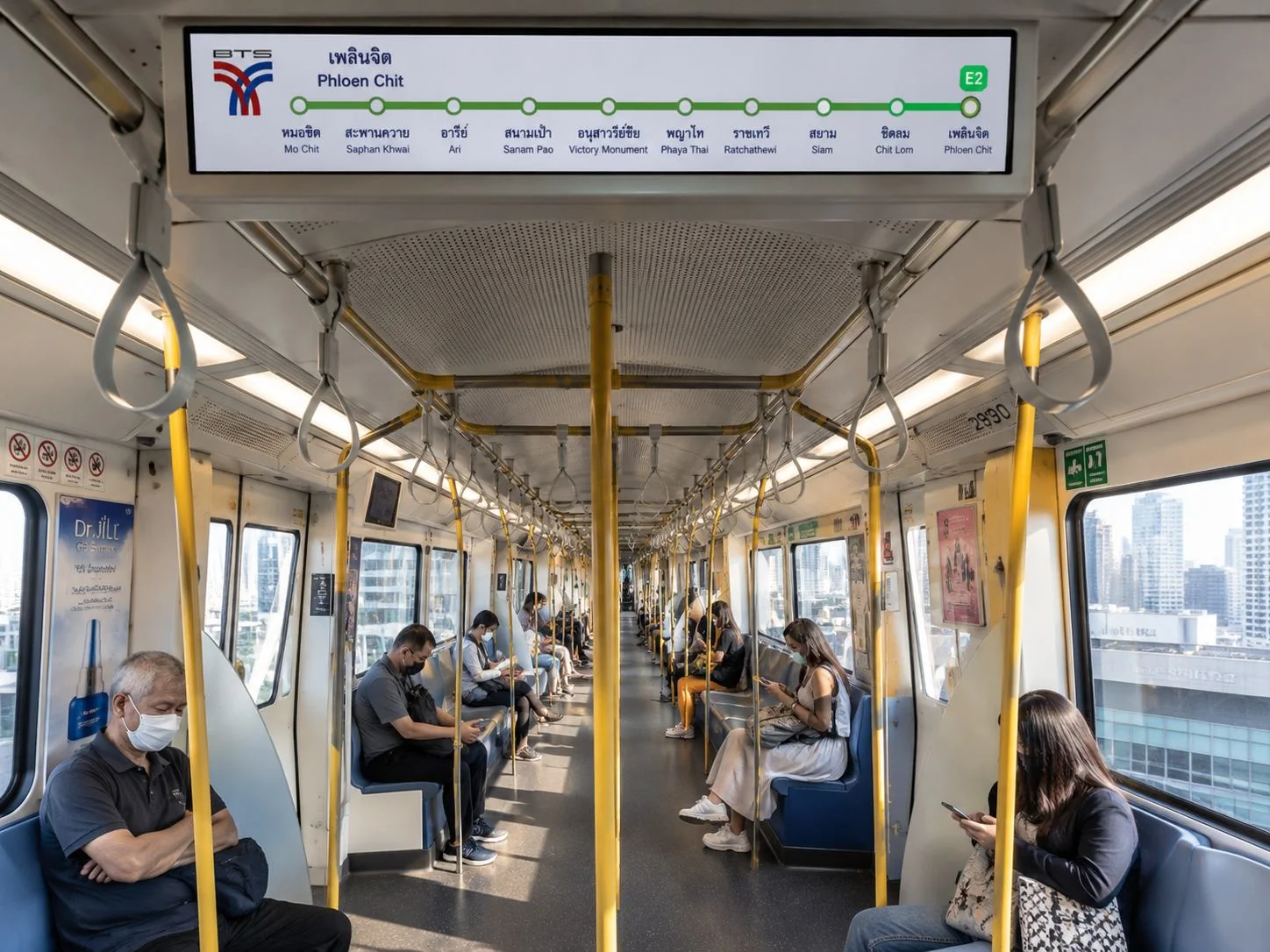
Guests staying along Sukhumvit are well placed for an early start. From BTS Nana — two minutes on foot from Royal Ivory Nana Hotel Bangkok on Soi 4 — ride the Skytrain two stops south to Asok, transfer to the MRT Blue Line, and alight at Hua Lamphong in under 20 minutes. A 07:30 train is entirely achievable with a relaxed breakfast first. Our Bangkok BTS Skytrain guide covers every interchange and fare zone if you want the full picture before you go.
Flying into Don Mueang Airport and heading straight north? Trains run directly from Don Mueang Station — across the road from the terminal — to Ayutthaya, saving a full hour each way and eliminating the need to cross Bangkok at all.
Arriving in Ayutthaya: The train delivers you to Ayutthaya Station on the east bank of the Chao Phraya River. The historic island — where all the major temples stand — lies across the water. A short ferry crossing costs THB 5. Tuk tuk drivers meet arriving trains at the station and are ready to negotiate.
| Transport | Journey Time | Cost | Best For |
|---|---|---|---|
| Train (Hua Lamphong) | 1h 20m – 1h 50m | THB 15–35 | Budget, atmosphere, flexibility |
| Minivan (Mo Chit) | 1h – 1h 30m | THB 60–80 | Speed, northern Bangkok travellers |
| Organised tour | Varies | THB 800–1,500 | First-timers wanting everything arranged |
| Private taxi / Grab | 1h – 1h 30m | THB 900–1,400 | Groups, door-to-door comfort |
Top Temples to Visit
Ayutthaya's historical park contains dozens of temple ruins spread across the island and its outskirts. A single day does not allow you to see them all — nor should you try. Focus on these five and you will leave with a genuine sense of the city's former grandeur.
- Wat Mahathat — the famous tree-embedded Buddha head. The single most essential stop in Ayutthaya.
- Wat Phra Si Sanphet — three great chedis standing in a line; the defining postcard image of Ayutthaya.
- Wat Chaiwatthanaram — a Khmer-style riverside temple that glows copper in late afternoon light.
- Wat Yai Chai Mongkhon — a colossal seated Buddha swathed in saffron robes, serene and commanding.
- Wat Ratchaburana — a dramatic prang (tower) with original frescoes surviving inside the crypt.
Most sites charge THB 50 entry. A combined day pass covering the main historical park temples costs THB 220 and pays off if you plan to visit four or more sites.
Wat Mahathat — The Tree Buddha Head
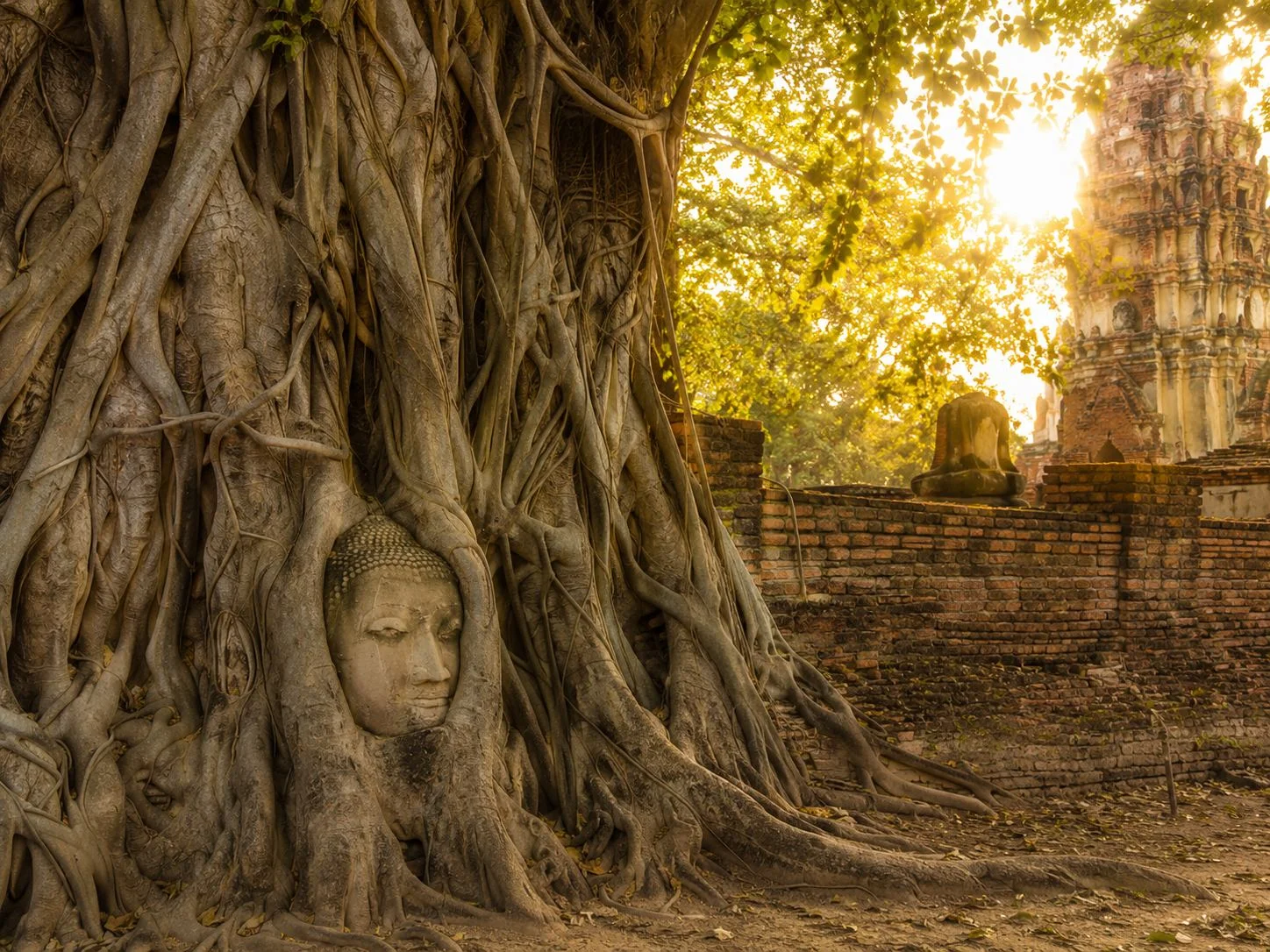
No single image defines Ayutthaya like this one. At some point in the 14th or 15th century, a carved stone Buddha head came to rest at the base of a bodhi tree. Over hundreds of years, the tree's roots grew steadily around the carved face, eventually drawing it into a living wooden embrace. Today the head sits perfectly cradled — eyes half-closed in ancient meditation, pale stone framed by dark, sinuous roots — one of the most iconic and quietly affecting sights in all of Thailand.
The image carries real spiritual weight for Thai Buddhists. Every photograph taken here becomes a meditation on time, impermanence, and the slow patience of nature reclaiming what was built. The instruction to kneel when photographing it is both practical — keeping your camera below the Buddha's eye level — and a gesture of respect that local visitors notice and appreciate.
Tips for Visiting Wat Mahathat
- Arrive early — the site opens at 08:00, and organised tour groups crowd the boardwalk from 10:00 onwards.
- Remove shoes before stepping onto the temple grounds at each entrance.
- Kneel when photographing the tree Buddha head; keep your camera below the level of the face.
- Budget at least 45 minutes — the surrounding ruins of prangs and corridors of headless Buddhas reward unhurried exploration.
- Entry costs THB 50.
The wider ruins of Wat Mahathat are extensive and often bypassed in the rush to find the famous head. Long rows of seated stone Buddhas, weathered sandstone towers, and quiet courtyards filled with frangipani make this one of the most atmospheric sites in the entire park — give it the time it deserves.
Hiring a Tuk Tuk vs Cycling
Once you cross the river onto the historic island, two transport options dominate the day: hire a tuk tuk driver for a guided loop of the main sites, or rent a bicycle and explore independently at your own pace.
Tuk Tuk for the Day
The standard rate runs THB 200–300 per person for a loop covering four to five temples. Drivers wait patiently while you visit each site, know the most photogenic angles, and can adjust the order if you want to linger somewhere longer. Agree on the price and the specific temples before you set off — write it down if language is an issue. In the hot season from April through October, when midday humidity is punishing, the air moving through an open tuk tuk between sites is a genuine relief. This is the most practical choice for first-time visitors or anyone travelling with children.
Cycling
Bicycle hire near the station and ferry pier runs THB 50–80 per day. The island is largely flat and all the major temples sit within a three-kilometre radius. Cycling lets you stop on impulse, duck into smaller wats that tuk tuk tours routinely skip, and set your own pace entirely. It is the better option between November and February when temperatures remain manageable through the afternoon hours.
How Long Do You Need?
One full day is enough to see Ayutthaya's highlights comfortably, provided you leave Bangkok early. Aim to board a train before 08:00 so you arrive on the island before 09:30, giving you the cooler morning hours for serious temple walking. Midday heat from March through October is significant — factor in a proper sit-down lunch rather than pushing through in direct sun. A late-afternoon train back puts you in Bangkok by early evening.
An overnight stay reveals a different Ayutthaya entirely. The ruins are floodlit after dark, the day-trip crowds evaporate, and the riverside restaurants along the Chao Phraya fill with a calmer, more local atmosphere. The major temples feel genuinely yours before the next wave of visitors arrives in the morning.
If Bangkok is your base, being close to BTS Nana keeps the logistics simple. Royal Ivory Nana Hotel Bangkok's rooms — ranging from 32 to 80 sqm with an outdoor pool — put you two minutes from the Skytrain and 20 minutes by MRT from Hua Lamphong. The same connection that serves your Ayutthaya morning train also puts you within easy reach of Bangkok's great temple cluster: the Grand Palace, Wat Pho, and Wat Arun make a natural companion itinerary on a separate day.
One Day Itinerary
This itinerary covers all five major sites without feeling rushed — adjust timings based on which train you catch.
- 06:45 — Depart BTS Nana. Ride to Asok, transfer to MRT Blue Line, alight at Hua Lamphong.
- 07:30 — Board train to Ayutthaya. Check the departure board for the next northbound service.
- 09:00 — Arrive Ayutthaya Station. Take the THB 5 river ferry to the island, then negotiate a tuk tuk for the day (THB 250 per person is a fair opening offer).
- 09:15 — Wat Mahathat. The tree Buddha head in soft morning light, ahead of the tour groups. (45 min)
- 10:15 — Wat Ratchaburana. Climb the prang for elevated views across the ruined cityscape. (30 min)
- 11:00 — Wat Phra Si Sanphet. Walk the grass between the three great chedis in the rising heat. (45 min)
- 12:00 — Lunch near the palace ruins. Riverside restaurants serve grilled river fish (plaa pow), tom kha, and cold Singha.
- 13:30 — Wat Yai Chai Mongkhon. The colossal seated and reclining Buddhas draped in orange cloth. (45 min)
- 15:00 — Cross the river west to Wat Chaiwatthanaram for warm afternoon light on the Khmer towers and their reflection in the water. (1 hour)
- 16:30 — Return to Ayutthaya Station. Board a Bangkok-bound train. Back at BTS Nana by 19:00.
Dropping Wat Yai Chai Mongkhon from the list buys a spare hour for free wandering, a coffee stop near the palace park, or simply more time at Wat Chaiwatthanaram as the sun drops. Neither version of the day leaves you short.
Basing yourself in Bangkok for the Ayutthaya day trip? Royal Ivory Nana Hotel Bangkok sits on Sukhumvit Soi 4 — two minutes from BTS Nana and a 20-minute MRT ride to Hua Lamphong for your morning train. Family-owned since 2010, outdoor pool, no joiner charge, and 90 rooms from 32 to 80 sqm. Book direct for the best available rate.
Frequently Asked Questions
How long is the train from Bangkok to Ayutthaya?
The train from Hua Lamphong to Ayutthaya takes between 1 hour 20 minutes and 1 hour 50 minutes depending on the service. Trains run roughly every hour beginning at 04:20, with frequent departures through the morning.
How much does the train to Ayutthaya cost?
Third-class trains cost THB 15 and second-class services run up to THB 35. No advance booking is needed — buy at the Hua Lamphong ticket window on the day of travel. It is one of the best-value journeys in Thailand.
Is one day enough for Ayutthaya?
Yes — one day is enough to visit the five essential temples comfortably, provided you catch an early train and arrive on the island before 09:30. An overnight stay rewards those who want to see the floodlit ruins, enjoy riverside dining without the crowds, and explore at a slower pace.
What should I wear at Ayutthaya temples?
Shoulders and knees must be covered at all temple sites. Lightweight, loose-fitting clothes in natural fabrics are ideal — it is hot and humid for much of the year, and you will remove your shoes at each temple entrance. A small tote bag for carrying footwear between sites is genuinely useful.
How do I get from BTS Nana to Hua Lamphong station?
From BTS Nana, take the Skytrain two stops south to Asok, then transfer to the MRT Blue Line. Hua Lamphong is the terminus of the Blue Line — approximately 12 minutes by MRT from Asok. The full journey from Nana takes under 20 minutes and costs around THB 50 in total fares.
What time does Wat Mahathat open?
Wat Mahathat opens at 08:00 and closes at 18:00 daily. Entry costs THB 50. Arriving at or shortly after opening gives you the best soft morning light for photographing the tree Buddha head and puts you ahead of the organised tour groups that arrive from 10:00 onwards.