Bangkok Packing List: Weather, Clothes and Thai Plug Types
Updated November 2026
Add Royal Ivory as a preferred source on Google
Start with the weather
Bangkok is warm all year, so you pack for heat, humidity and rain rather than for cold. A rough guide to the seasons is below. Conditions vary from year to year, so check the forecast before you fly. Our guide to the best time to visit Bangkok has more detail.
| Season (approx.) | What to expect | Pack extra |
|---|---|---|
| Cool, dry (Nov to Feb) | The most comfortable months, still warm by day; evenings can feel slightly cooler | Light layer for evenings and cold air-conditioning, sunglasses, mask for poor air days |
| Hot (Mar to May) | Very hot and humid, strong sun | Hat, high-SPF sunscreen, extra light tops, refillable water bottle |
| Rainy (about May/Jun to Oct) | Warm, humid, with heavy showers often in the afternoon | Compact umbrella or light rain jacket, quick-dry clothes, waterproof pouch for phone |
Clothes that work
Choose light, loose fabrics such as cotton, linen or quick-dry synthetics. Colours that hide sweat marks help. Plan on changing once a day, and consider that laundry is easy to find, so you can pack fewer items and wash on the way.
- Tops: five to seven light T-shirts or shirts. Include some with sleeves for temples.
- Bottoms: two pairs of light long trousers or a long skirt for temples, plus shorts for everything else.
- Layer: a thin cardigan or overshirt, because trains, malls and cinemas can be very cold.
- Swimwear: for hotel pools and day trips.
- Underwear and socks: enough for the trip, as these dry slowly in humid weather.
Evening dress is smart-casual in most places, but some rooftop bars and upmarket venues have their own rules. Read our Bangkok dress code guide for temples, malls and nightlife, and see our rooftop bars guide if you plan on dressing up.
Shoes and bags
You will walk more than you expect, often on uneven pavements and in heat. Bring comfortable, broken-in sandals or trainers, and add slip-on shoes you can take off easily at temples. Footwear for the rainy season should dry quickly; leather soaks and stays damp. A small day bag with a zip, ideally worn in front in crowds, is better than a loose tote.
Staying near Nana?
Royal Ivory Nana Hotel Bangkok is at 73 Sukhumvit Soi 4, about 2 minutes' walk from BTS Nana. See the rooms or call +66 2 656 7888 with any question before you travel.
Thai plugs, sockets and voltage
Thailand's standard supply is 220 volts at 50 Hz. Travel guides and electrical references list several plug types in use: Type A, B and C are the ones most visitors meet, and Type F and Type O are also listed for Thailand. Many sockets are "universal" or hybrid designs that take both flat and round pins, so a visitor from North America, Europe or the UK will often find a way to plug in.
However, do not rely on luck. Bring a good-quality universal travel adapter, and carry it in your hand luggage so you can charge a phone on arrival.
Voltage: do you need a converter?
- Phones, laptops, cameras and most chargers are dual-voltage (usually marked 100-240V), so they need only an adapter.
- Hair dryers, straighteners and some shavers are often single-voltage. Check the label; if it says 110-120V only, it needs a converter or should be left at home. Most hotels supply a hair dryer.
- Power banks: carry them in cabin baggage, not in checked bags, and check your airline's limits.
Rules and sockets can change, so confirm your hotel's sockets in advance if you rely on specialist equipment. For Royal Ivory Nana Hotel Bangkok, you can ask the front desk when booking through the contact details on the rooms page.
SIM, eSIM and getting online
Having mobile data on arrival makes maps, ride-hailing and translation simple. Many visitors buy a tourist SIM at the airport, while others install an eSIM before they leave home if their phone supports it. Compare coverage, data limits and validity first. Our SIM card and internet guide covers the options in detail. Save offline maps as a backup.
Documents, money and health items
- Passport: check validity requirements for entry and carry photocopies or digital copies stored separately. Our visa on arrival guide gives background, and you should always check current rules with official sources.
- Money: a card that works abroad plus some cash. See the currency exchange guide, and the cashless payment guide for QR habits.
- Insurance: a policy that covers medical care and your belongings, printed or saved offline.
- Medicines: your regular prescriptions in original packaging, plus basics such as rehydration salts, plasters and any allergy tablets. Pharmacies are plentiful, as our pharmacy and medical care guide explains.
- Sun and insect protection: sunscreen and repellent are available locally but you may prefer your usual brand.
Toiletries and small extras
Bangkok has pharmacies, convenience stores and malls on almost every main road, so you can travel with travel-size toiletries and buy more as needed. Useful extras include a small pack of tissues or wet wipes, because some public toilets lack paper, a lightweight dry bag or zip bags for wet clothes, a compact padlock for lockers and luggage, and a reusable shopping bag. Deodorant and sun protection are available but brands differ, so bring your favourite if it matters to you. Contact lens solution and specific medicines are best brought from home.
Final checklist
- Light clothes, one rain layer and one thin warm layer
- Temple-friendly top and bottom (shoulders and knees covered)
- Comfortable walking shoes plus slip-ons
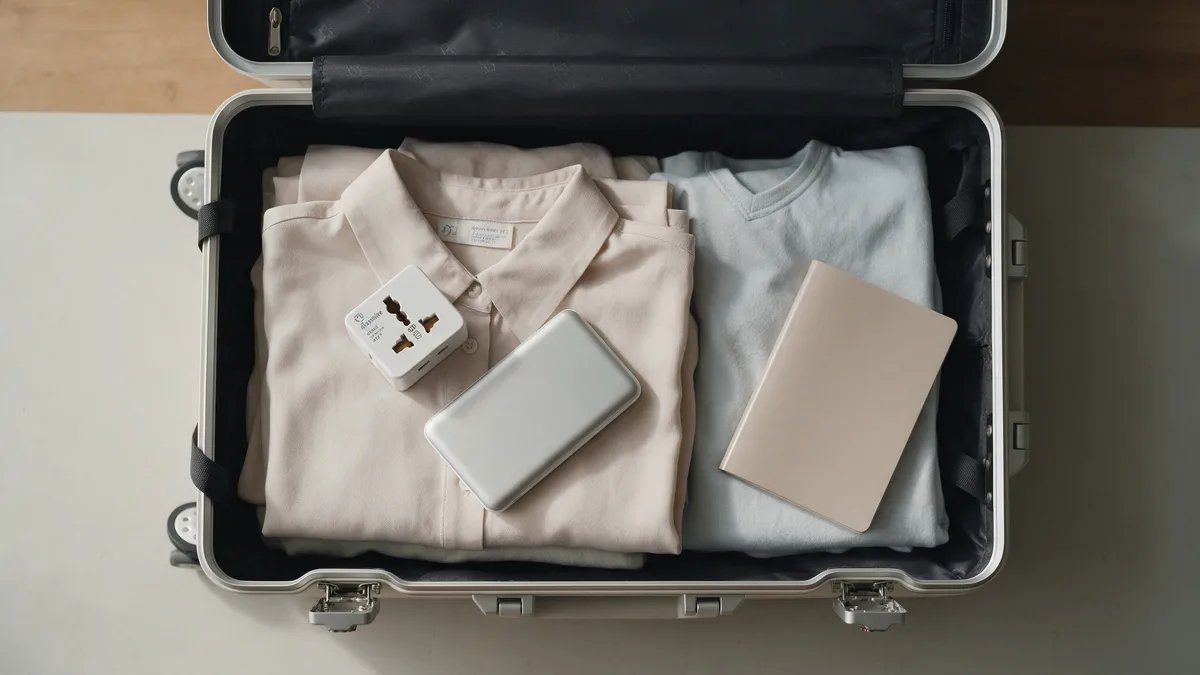
- Universal adapter, power bank, phone and charger
- Reusable water bottle, hat, sunglasses and sunscreen
- Insurance, passport copies and small money pouch
Pack less than you think. You can always buy extra items in Bangkok's malls; see the Sukhumvit shopping guide if you need to fill a gap. If your hotel is close to the BTS, as Royal Ivory Nana Hotel Bangkok is at Sukhumvit Soi 4, a lighter bag also makes each walk to the station easier.
Key Takeaways
- Pack light, breathable clothes and plan for heat, humidity and rain rather than cold.
- Bring covered-shoulder and covered-knee options for temples and palaces.
- Thailand uses 220V at 50Hz; bring a universal adapter for Type A, B, C, F and O sockets.
- Dual-voltage electronics need only an adapter; check labels on hair dryers and shavers.
- Sort mobile data before you arrive, using a SIM or eSIM, and carry insurance details offline.
Frequently Asked Questions
What plug type does Thailand use?
Sockets commonly accept Type A, B and C plugs, and Types F and O are also listed for Thailand. Many sockets are hybrid, but a universal travel adapter is the safest choice.
What is the voltage in Thailand?
Thailand uses 220 volts at 50 Hz. Dual-voltage devices marked 100-240V work with an adapter only; single-voltage 110-120V devices need a converter or should stay at home.
Do I need warm clothes for Bangkok?
Not for the weather, but a thin layer is useful because air-conditioning in trains, malls and cinemas can be very cold.
What should I wear to temples in Bangkok?
Cover your shoulders and knees and avoid see-through or very tight clothing. Wear shoes that are easy to slip off, because you remove them before entering temple halls.
Should I buy a SIM card or an eSIM?
Either works. An eSIM can be set up before you land if your phone supports it, while a SIM can be bought at the airport. Compare coverage and data limits first.