Bangkok Heat, Hydration and Air Quality: A Traveller's Health Guide
Updated October 2026
Add Royal Ivory as a preferred source on Google
What the climate is like
Bangkok sits in the tropics, so warm to hot temperatures and high humidity are normal in every month. The year is usually described in three seasons: a hot season in roughly March to May, a rainy season from about May or June into October, and a cooler, drier season from about November to February. Even the "cool" season feels warm by most visitors' standards. Our guide to the best time to visit Bangkok goes through each season in more detail.
Humidity matters as much as temperature. When the air is moist, sweat evaporates slowly and the body cools less efficiently, so a day that looks manageable on a forecast can feel much harder on the street. This guide gives general, conservative travel advice only; it is not a substitute for medical advice from a doctor who knows your health history.
Hydration basics
Start drinking before you feel thirsty and keep a bottle with you when you walk. Sip steadily rather than drinking a lot at once. Bottled water is cheap and sold everywhere, including in convenience stores, and is the usual choice for visitors. Most travellers avoid drinking tap water.
- Watch your urine colour. Pale yellow usually means you are drinking enough. Dark yellow suggests you need more fluid.
- Replace salts as well as water. If you are sweating heavily, oral rehydration drinks or sachets, sold at pharmacies, help. Fruit and a salty snack are also useful.
- Go easy on alcohol. Alcohol and heat dehydrate you faster, particularly on the day after a long night out. Alternate drinks with water.
- Be careful with ice and street drinks. Busy, high-turnover stalls are generally a safer bet than quiet ones. See our street food guide for what to look for.
Plan your day around the heat
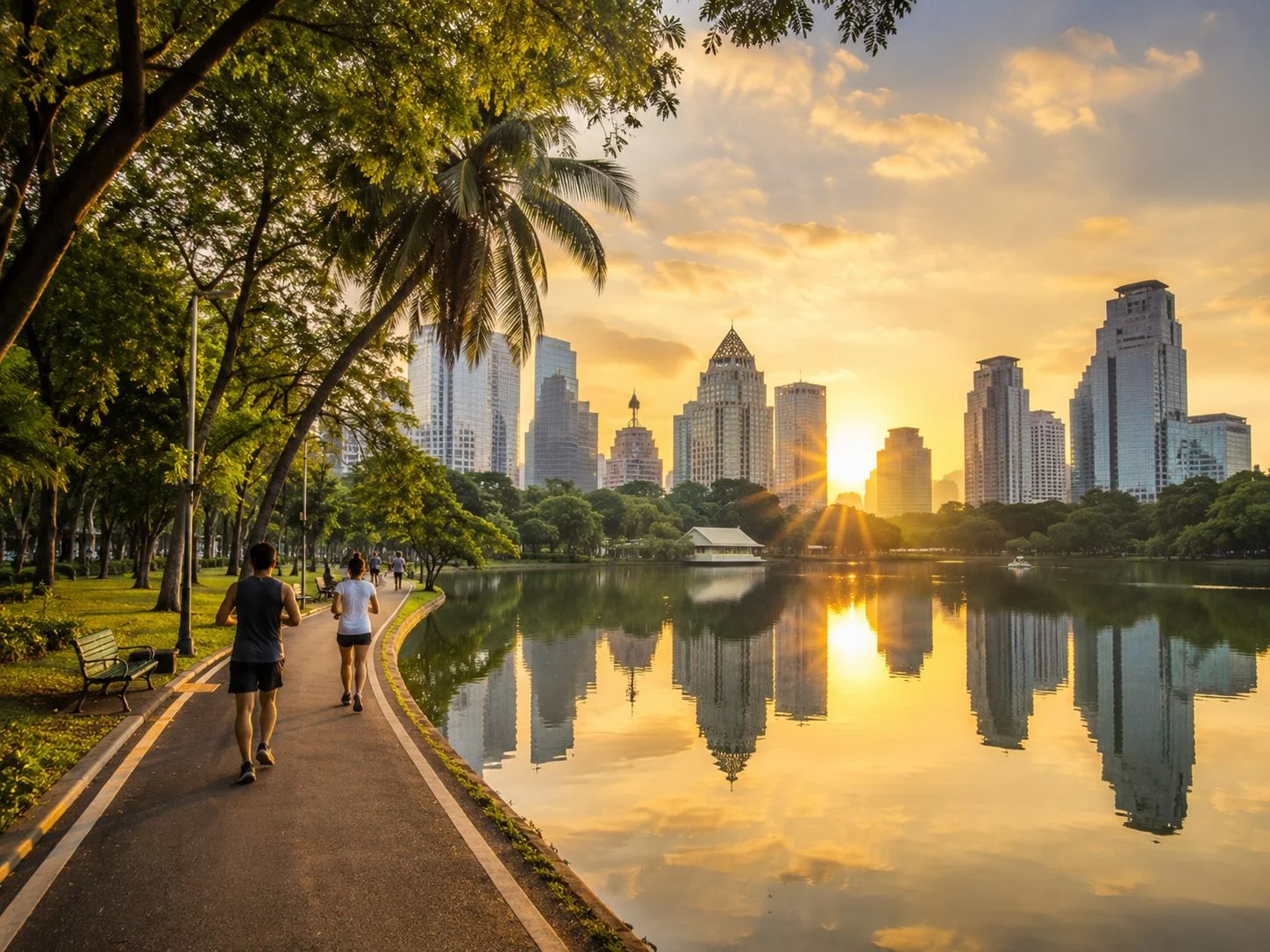
The hottest hours are typically late morning to mid-afternoon. Schedule outdoor sights such as temples and markets for the early morning or late afternoon, and use the middle of the day for a museum, a mall or a pool. Parks such as Lumpini Park and Benjakitti Park are most pleasant early or near sunset. If you are travelling in the rains, the rainy season indoor activities list helps with plans.
Wear light, loose clothing in breathable fabrics, a hat and sunglasses. Remember that temples require covered shoulders and knees, so choose thin long trousers or a light scarf rather than shorts; our dress code guide has more.
Staying near Nana?
Royal Ivory Nana Hotel Bangkok is at 73 Sukhumvit Soi 4, about 2 minutes' walk from BTS Nana. See the rooms or call +66 2 656 7888 with any question before you travel.
Heat illness: signs and what to do
Heat exhaustion is the common problem. Typical signs are heavy sweating, headache, dizziness, nausea, muscle cramps and unusual tiredness. If you notice these, stop, move to shade or air-conditioning, loosen clothing, sip water or an oral rehydration drink and rest. Cool wet cloths on the neck and wrists can help.
Heat stroke is an emergency. Warning signs include confusion, slurred speech, fainting, a very high body temperature, hot dry skin or stopping sweating, and seizures. Do not wait: call 1669 (ambulance) in Thailand or ask your hotel to help, and cool the person while waiting. When in doubt, treat it as serious.
Sun and mosquitoes
Use a broad-spectrum sunscreen, reapply during the day and wear a hat. Sunburn makes heat illness more likely.
Mosquitoes are active in Bangkok, and dengue is a recognised risk in Thailand; cases are generally reported more in the rainy season, but it is wise to take precautions all year. Use insect repellent, cover up around dusk and in shady parks, and check current health advice from your own government's travel health service before you travel. Seek medical care if you develop a high fever, severe headache, pain behind the eyes or a rash after a trip.
Air quality: when to pay attention
Bangkok's air quality is usually better in the rainy months and worse in the cooler, drier months. Studies of the city's long-term monitoring data show higher fine-particle (PM2.5) levels in the cool dry season, roughly December to February, with some days of poor air reported from about November through March. Weather, traffic and regional smoke all play a role, and conditions vary from day to day, so treat these months as a window to watch rather than a guarantee.
- Check live readings on the official Air4Thai site run by the Pollution Control Department, or on an air quality app, each morning.
- On poor-air days, shorten outdoor time, avoid exercise near traffic and favour indoor sights.
- If you have asthma, heart or lung conditions, bring your regular medicines and speak to your doctor before travelling in these months.
- A well-fitted N95 or equivalent mask is more effective than a loose cloth or surgical mask on bad days.
Pharmacies and medical care
Pharmacies are easy to find, and staff can help with minor problems such as upset stomach, rehydration products and sunburn. Bring a supply of any prescription medicine in its original packaging with a copy of the prescription, and check that it is legal to carry. Our pharmacy and medical care guide covers what to expect from pharmacies, clinics and hospitals.
Buy travel insurance that covers medical treatment before you leave. For urgent help, 1669 is the ambulance number and 1155 the Tourist Police; if you are unsure what to do, ask your hotel to help you reach a clinic. More contact steps are in our emergency and embassy guide.
Cool down between sights
Skytrain stations, malls and cafes are all air-conditioned and make good rest stops. A pool is another easy reset. If your hotel has one, take a break mid-afternoon; Royal Ivory Nana Hotel Bangkok has a pool and is about 2 minutes' walk from BTS Nana. See the rooms page for the stay options, and our hotel pool day pass guide if you are staying elsewhere.
Key Takeaways
- Drink steadily, carry bottled water and replace salts when you sweat heavily.
- Do outdoor sights early or late and rest in air-conditioning in the middle of the day.
- Know the signs of heat exhaustion, and treat confusion or fainting as an emergency (1669).
- Air quality is usually worst from about December to February, so check daily readings.
- Use sun and mosquito protection and get travel insurance that covers medical care.
Frequently Asked Questions
When is Bangkok's air quality worst?
Fine-particle pollution is usually highest in the cooler, dry months, roughly December to February, with some poor days from about November to March. Check live readings daily because conditions vary.
Is it safe to drink tap water in Bangkok?
Most visitors stick to bottled water, which is cheap and widely sold. Brush your teeth with bottled water if you have a sensitive stomach.
How much water should I drink in Bangkok?
There is no single number. Drink regularly through the day, more when you walk or sweat heavily, and aim for pale yellow urine. Replace salts as well if you are sweating a lot.
What are the signs of heat stroke?
Confusion, slurred speech, fainting, very hot skin, a stop in sweating or seizures. Call 1669 and cool the person immediately; do not wait for it to pass.
Can I buy medicine at a pharmacy without a prescription?
Pharmacies sell many common medicines over the counter, but rules differ by drug. Carry prescription medicines in original packaging with a doctor's letter, and ask the pharmacist for advice.


